Chapter 06
Imagery
What a picture on a house surface may be, who makes it, what a generator may be asked for, and why nothing moves. Written from 01_BRAND-LAYER/imagery-and-motion.md v1, 2026-08-23.
Three kinds of picture, and nothing else
Every image on a house surface is exactly one of these three. Anything that is not one of them is banned, including a picture of ours whose only job is to make a page look better.
| Kind | Made by | Its job | The test |
|---|---|---|---|
| Evidence photograph | A camera, operated by a photographer or by the client. The client chose the frame. | It proves a claim made on the same surface. | Remove it and a sentence loses its proof. Client and claim named on the same surface. Greyscale file. |
| Chrome explainer object | A generator, to the recipe below, background removed. | It illustrates the method or the system, beside its explanation. | Same finish as the ruled family. Never a fill, never on a signal field. |
| Generated field or material | A generator. | It shows a material or a layout mood to a builder or a vendor. It is internal. | No face, no letterform, no mark, no client work. Labelled generated wherever it is shown. |
The decorative image test
Remove the image. If no claim was lost, the image was decoration and does not belong on the surface.
Photography
Real client work only, raw, chosen by its owner. Monochrome on a house surface, in colour on the client's own.
- Real client work only Every image on a house surface names its client and its claim on the same surface. Count the images that lack either. Zero.
- Monochrome on house surfaces Continuous tone. No halftone, no filter, no added grain. Grain only if the negative or the sensor had it. The delivered file is one channel. A colour photograph is a second, ungated chroma sitting beside the signal or the person pair.
- On the client's own surfaces their work keeps its colour Audit frames are shown as posted, unadjusted, credited. The frame is the finding. Beside their mark, ours is smaller.
- Full bleed, or inside one hairline Either the paper hairline or the chrome frame. Never both, never a rounded mask, never a shadow.
- No type over an image, no image on a signal field, no mark on a photograph The image box intersects no text box and no signal field. Type sits on a ground. A signal field carries display type in its own ink and nothing else. There is no photographic lockup for the mark.
What a frame shows, in order of preference
- The work being made: the hand, the tool, the surface being worked.
- The work freshly finished, before it leaves the room.
- The tools and the room: the bench, the machine, the light the work is made in.
Never a person presenting. No portrait of the client in front of the work, no handshake, no phone held up, no group.
The conversion, done by the house
The photographer delivers colour originals and the house converts, with one command, using the same luminance weighting the contrast gates use. That way a tone read on the converted file is the tone the gates read. Delivery is sRGB, four thousand pixels or more on the long edge, no output sharpening, the camera's own file name kept in the metadata.
The portrait of a founder
The one photograph of a person the house makes. One per founder, made once, re-shot when the person changes, never generated, never retouched past dust. It is evidence of one thing: who signs. So it appears only beside that founder's name and words, never as a hero, never larger than the client's work on the same surface, and never on an audit, where the reader is the subject and nobody else's face belongs.
One hard source at 45 degrees off axis and 30 above the eye line. Never a softbox, a beauty dish, a ring light or an umbrella. No fill, no rim, no hair light. One catchlight. One plain wall, out of focus, either near white or near black and nothing in between, because the identity has two grounds and a mid grey wall is a third. Neutral face, mouth closed. A grin at the lens is a coach.
The chrome explainer objects
Three objects were ruled into the family on 2026-08-22. They lie on the paper against the type, beside an explanation of the method or the system, and nowhere else.
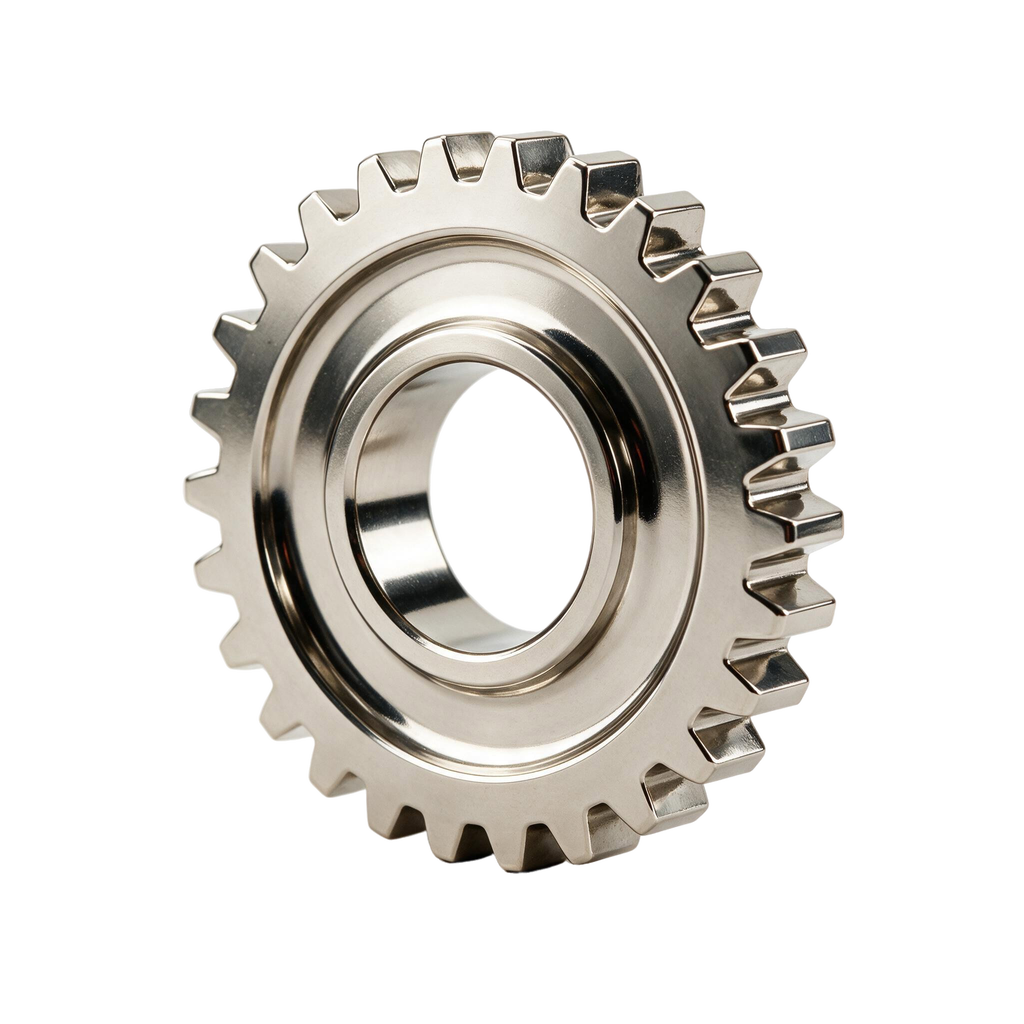
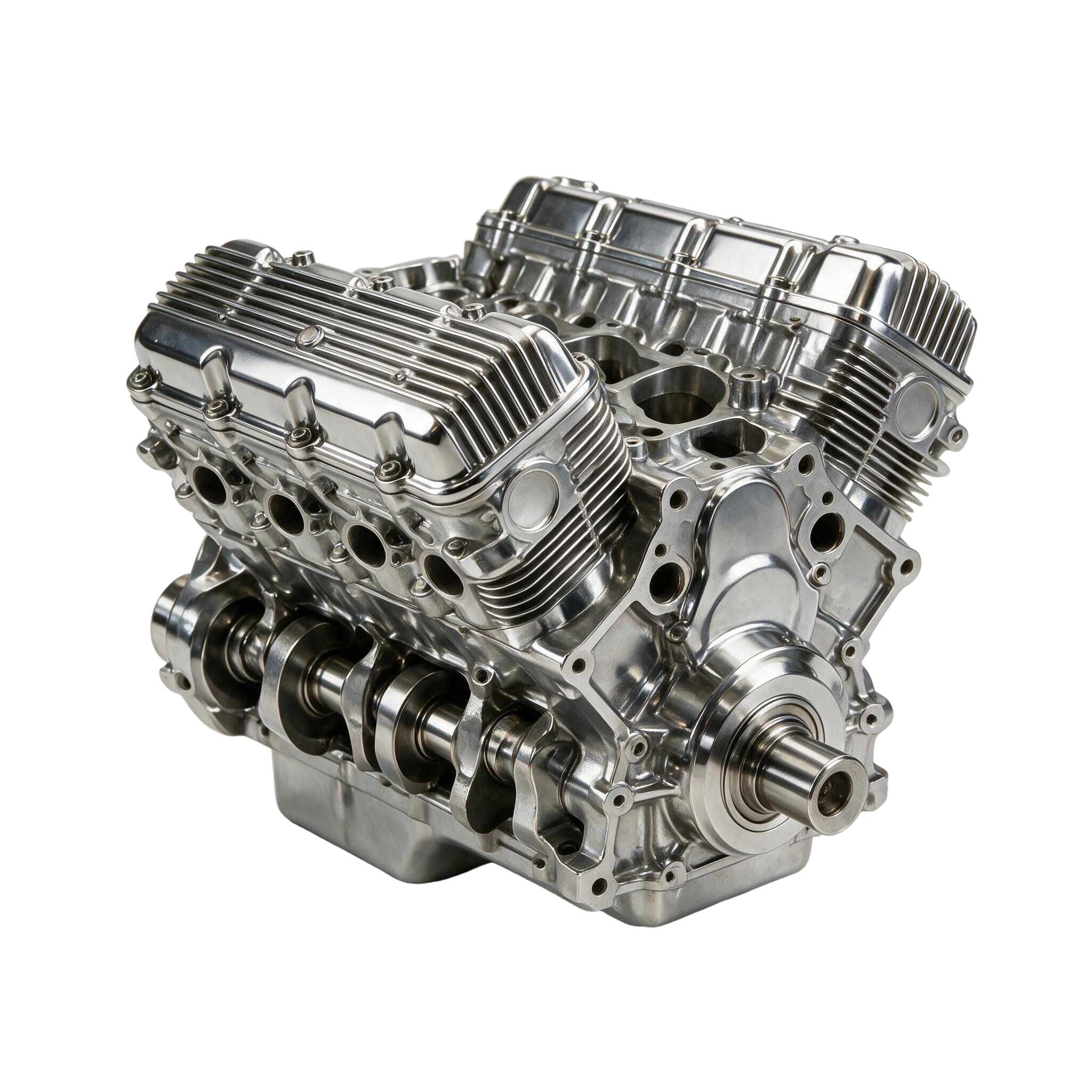
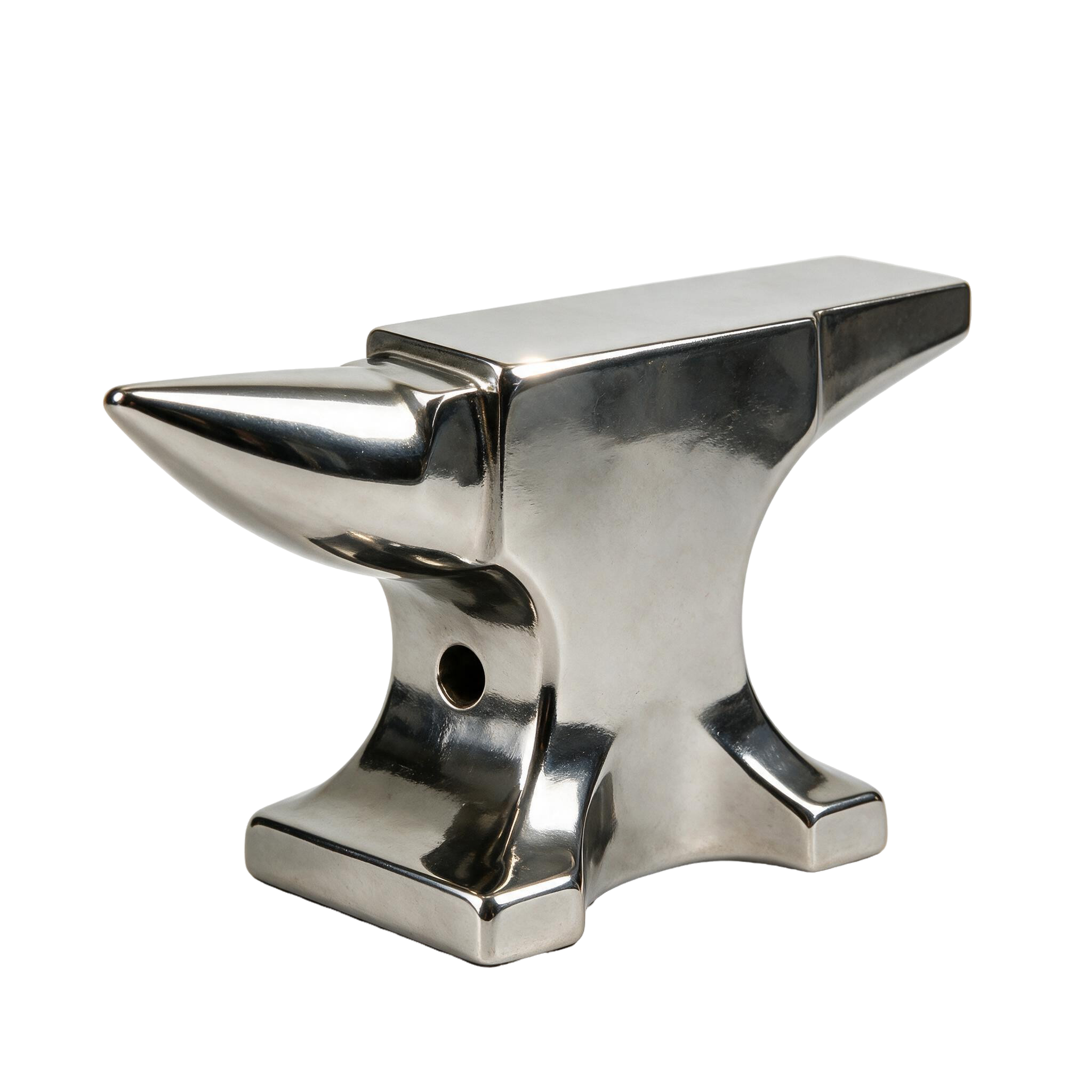
- Where an object may appear Beside an explanation of the method or the system, and nowhere else. A slogan, a testimonial, a price, a finding or a form never needs one. The one exception is a social highlight cover, which has no type to explain and carries the object alone.
- On paper, against the type Never a signal field, never the flood. On the flood the one chrome object is the mark, and a second is a fill by accumulation.
- A figure, never a fill An image element in the explainer molecule. Never a background image, never under type, never a band, a slab, a button or a letterform.
- As delivered Own aspect ratio, unrecoloured, unflipped, unrotated, no shadow, no filter. A variant is a new generation, not an edit. A different size is one resize of the source file.
The test a new object has to pass, rewritten on 2026-08-25
The old rule asked whether a new object carries a fourth meaning or is just a second gear. That question gets answered in the workshop, and answering it there is the fault. A ratchet wheel turns one way where a gear turns both, so it passes the old rule, and a reader still sees a toothed wheel and thinks what they thought about the gear.
The rule now: before generating anything, write the one sentence the reader should think when they see the object. If that sentence needs a caption to arrive, the object is wrong, whatever it measures. The objects made under this test carry their sentence in the record. A tally counter at zero says nothing has been counted. A funnel says everything pours through one hole. An ingot with three blank tags says many labels, one thing, none filled in.
The recipe, if a new one is justified
One model, one prompt, one angle. A polished chrome object, pure white background, warm neutral silver, one specular highlight, three quarter angle, no text. Nothing else goes in the prompt: no style word, no camera word, no brand, no person, no scene. Every added word is a second author, and the family exists because the three were made with that sentence and nothing else. Then pick from four variants the one that sits in a row with the family at a quarter scale, remove the background, and measure it before it is accepted. The spend is stated in the project state file before the run, not after.
What a generator may be asked for
A generator is for the things a camera cannot photograph because they do not exist yet, and for a picture of our own artwork in a place so a vendor can be briefed. Nothing a generator makes is evidence.
May be generated
Objects: tools, machine parts, stock, a blank card, a blank plate. Materials: ink on paper, brushed or polished metal, uncoated stock. Abstract fields: slabs, bands, rules, a layout mood with no glyph in it.
Shown as an explainer object on paper, or as an internal reference for a photographer, a printer or a builder, or on a surface only as a labelled material study.
May not be generated
A face, a hand, a body, any person, whole or cropped. Client work or anything readable as client work. Anything shown as evidence: a result, a before and after, a screen of numbers. Type, letterforms, a mark, a logo, a signature. A photograph of a founder, a client or a teammate. A house surface itself as a generated picture.
A generated receipt is a forged one. A generated page is a guess at the identity with the real one sitting in the next folder.
The guard, on every run
The words no text, no logos, no people go into every prompt. The earlier mood run carried only the first two and still produced a person frame per candidate and two fields of invented glyphs, because a generator invents letters and the brief had asked for a person at their craft. The guard now names people, and the brief no longer asks.
The composite rule: the real mark is never generated
No generator ever draws the mark, redraws it, keeps it, extrudes it or relights it. Where a generated image has to carry the mark, on a mockup of a card or a shirt or a video intro, the image is generated without it and the real file is composited in afterwards by a deterministic tool. The same holds for the slogan and every letterform. Text is set by the house in the house faces, never generated.
The label rule
A generated image carries the word generated in its file name or its caption wherever it is shown internally, and is never captioned as a photograph, a client, or evidence.
Examples that pass, and two that fail
The three objects above pass. So do three of the mood frames from the direction contest, as internal references and never as photographs. Two frames failed, and they are described here rather than shown, because a generated face may not sit on a house surface, which is the exact rule they broke.
Passes, as an internal reference
Three ink slabs and one vermilion band on paper. Ink flooding cotton paper with a printed edge. A flat layout mood of slab, band, hairlines and one small ink block.
No face, no glyph, no mark. The second one is achromatic by measurement and shows a printer what ink at full coverage means without a word. Each passes as the kind it is filed under, at the place the rule allows.
Fails, and why it matters
A generated tattoo artist bent over a forearm, tattoos on his arms that no artist ever made. And the same subject on the losing candidate's page, face fully visible, captioned as the evidence.
A fake practitioner on a page selling to practitioners is a screenshot in the group chat within the hour. The first image was bad. The caption on the second made it a lie: it called a synthetic person evidence, which is the forged receipt the claims value exists to prevent.
Nothing generated ships externally
A jury condition on the direction: real photography replaces the AI moods before anything goes outside. No real client photograph is approved for a house surface yet, and no founder has been shot. Until then a surface that needs a picture either uses a chrome object or carries none.
Motion
A printed sheet does not animate. It is already set. Both motion tokens are zero milliseconds, and the six rules below are the whole of it.
- Every duration is zero Grep a house stylesheet for a transition, an animation or a keyframe block. Every duration reads zero and the keyframe count is zero.
- First paint is the only transition The whole surface, one pass, and it is the browser's own. Two screenshots a second apart are pixel identical.
- Nothing scrolls, staggers, counts, parallaxes, pulses or follows the cursor Every number reads the same before and after scrolling. No scroll listener writes a style.
- A state change is an inversion, not a fade A frame by frame capture of a hover shows two states, never a third.
- A signal field never animates Its computed style is identical at load, on hover, and after scroll.
- The reduced motion setting changes nothing Render with the query forced on and off. The stylesheets differ by zero lines, because nothing moves in the first place.
The one exception, and it is not an animation
A video has a first frame, and the first frame of a house video is the mark on the flood, held for three seconds, then a cut. The mark does not move, scale, shimmer, sweep or ease. Frame zero is the flood. Frame one is the flood plus the mark at full opacity. Every frame after that is pixel identical to frame one. Then the cut, never a dissolve, because nothing in the system fades.
The composition is the social preview image's: the light mark at 80 percent of the frame width, centred both ways, with a full mark height of clear space. Every frame size in the record puts the mark above its 240 pixel flood floor. No sting, no whoosh, no vignette, no grain.
The ban list, short form
The checks a reviewer runs on a surface, in one pass. Zero hits on each.
Stock photography. An AI face, or an AI image shown as a photograph. People presenting. A decorative image. A colour photograph on a house surface. Halftone, added grain, vignette, filter or tint. Textured or distressed type. A mockup style perspective render on a surface. A chrome fill. Texture added to make paper look like paper. A shadow or a gradient background. A mark on a photograph, type over an image, or an image on a signal field. A generated letterform or mark. Any non zero duration.
Chapter 06 of the Unforged brand book. Written from 01_IDENTITY/01_BRAND-LAYER/imagery-and-motion.md v1, 2026-08-23, with the object test rewritten 2026-08-25. The photographer brief and the generator run sheet are rendered under 04_TEMPLATES/03_BRIEFS/.