Chapter 07
Surfaces
Twenty templates, composed from the component library and nothing else. Each tile below shows the artwork the template renders and links the folder that holds it. The folder's README carries the copy slots, the dimensions, the print specs and the render command.
Online
Everything that ships as pixels. The deck and the document are page systems; the Instagram set is a grid spec with seven tile templates under it; the two email templates are the only house artefacts that carry their values as literals, because a mail client ignores custom properties.
-
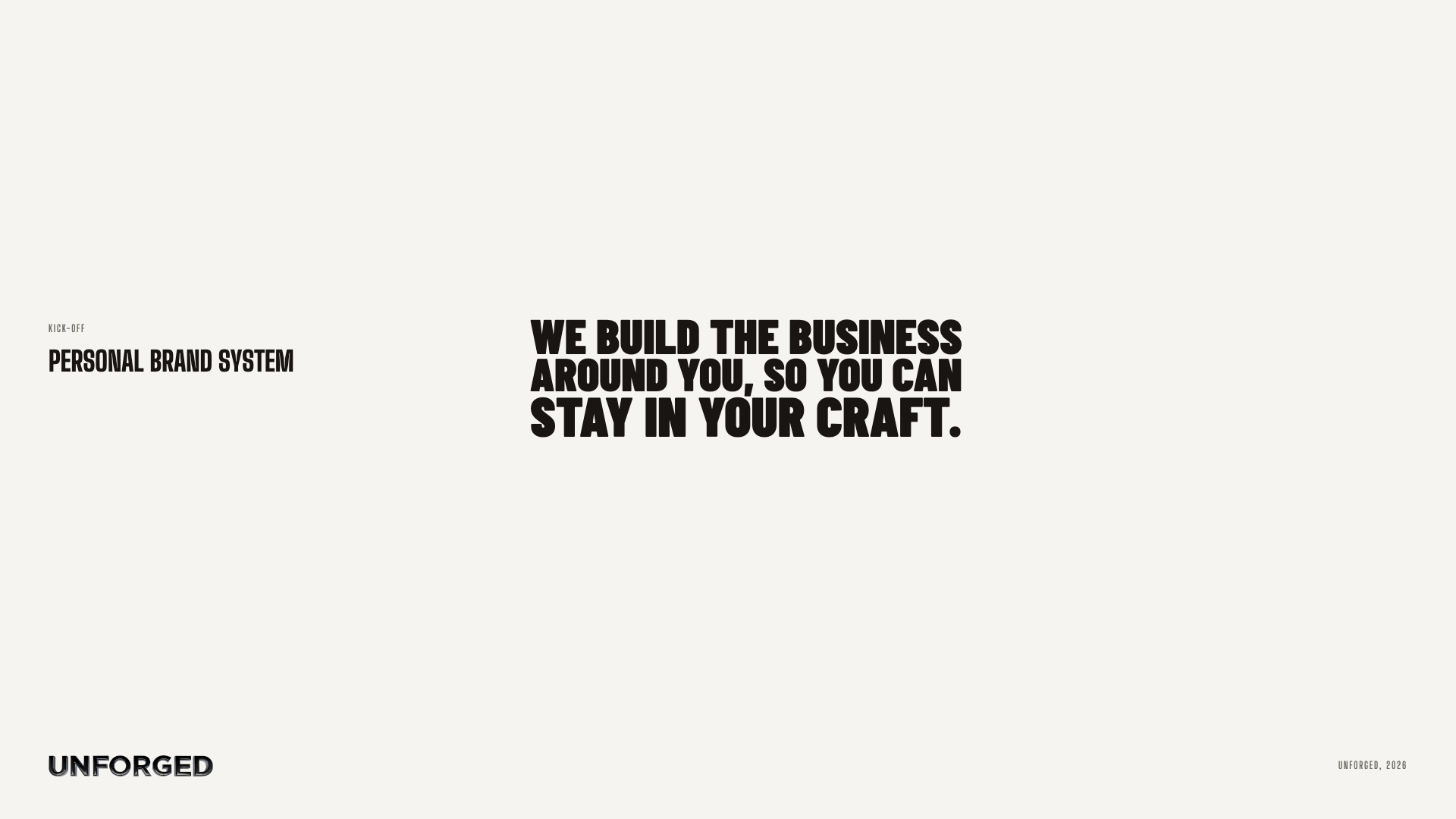 Deck master
Twelve slide settings on a 16:9 artboard, rendered at 1920 and 3840. Title, divider, statement, content, columns, table, method, proof, offer, audit, close, and a close that carries the legal line.
Deck master
Twelve slide settings on a 16:9 artboard, rendered at 1920 and 3840. Title, divider, statement, content, columns, table, method, proof, offer, audit, close, and a close that carries the legal line.
-
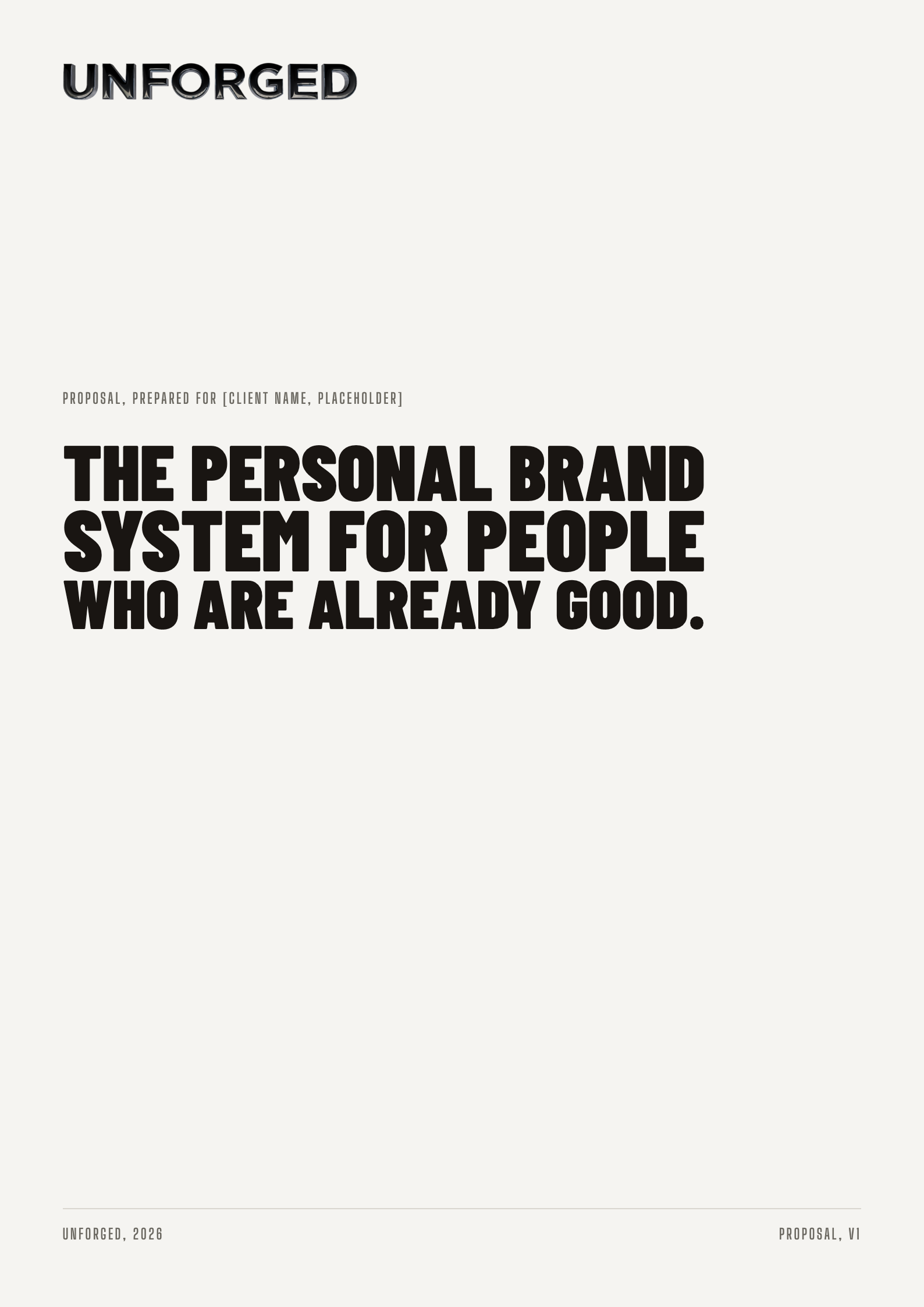 Document and proposal
The fixed page a prospect or a client reads. Seven sheets, cover to legal, plus the assembled PDF. This is the frame the two briefs are built on.
Document and proposal
The fixed page a prospect or a client reads. Seven sheets, cover to legal, plus the assembled PDF. This is the frame the two briefs are built on.
-
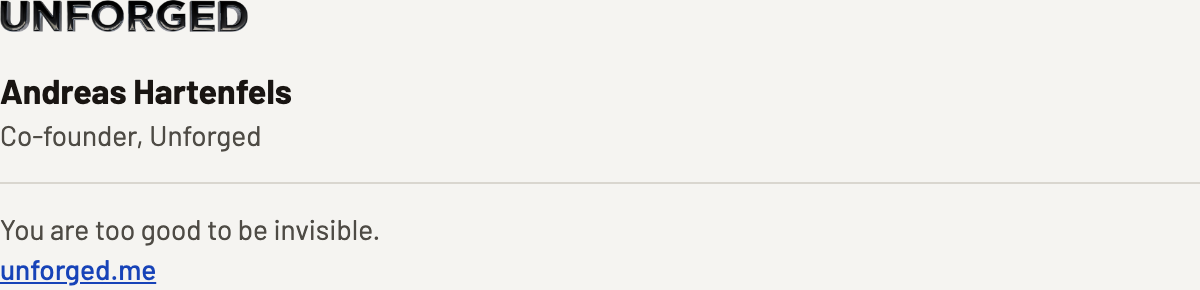 Email signature
The table a teammate pastes into a mail client. 600 pixels at most, every value inline, the dark mark. It carries no face until a founder portrait exists.
Email signature
The table a teammate pastes into a mail client. 600 pixels at most, every value inline, the dark mark. It carries no face until a founder portrait exists.
-
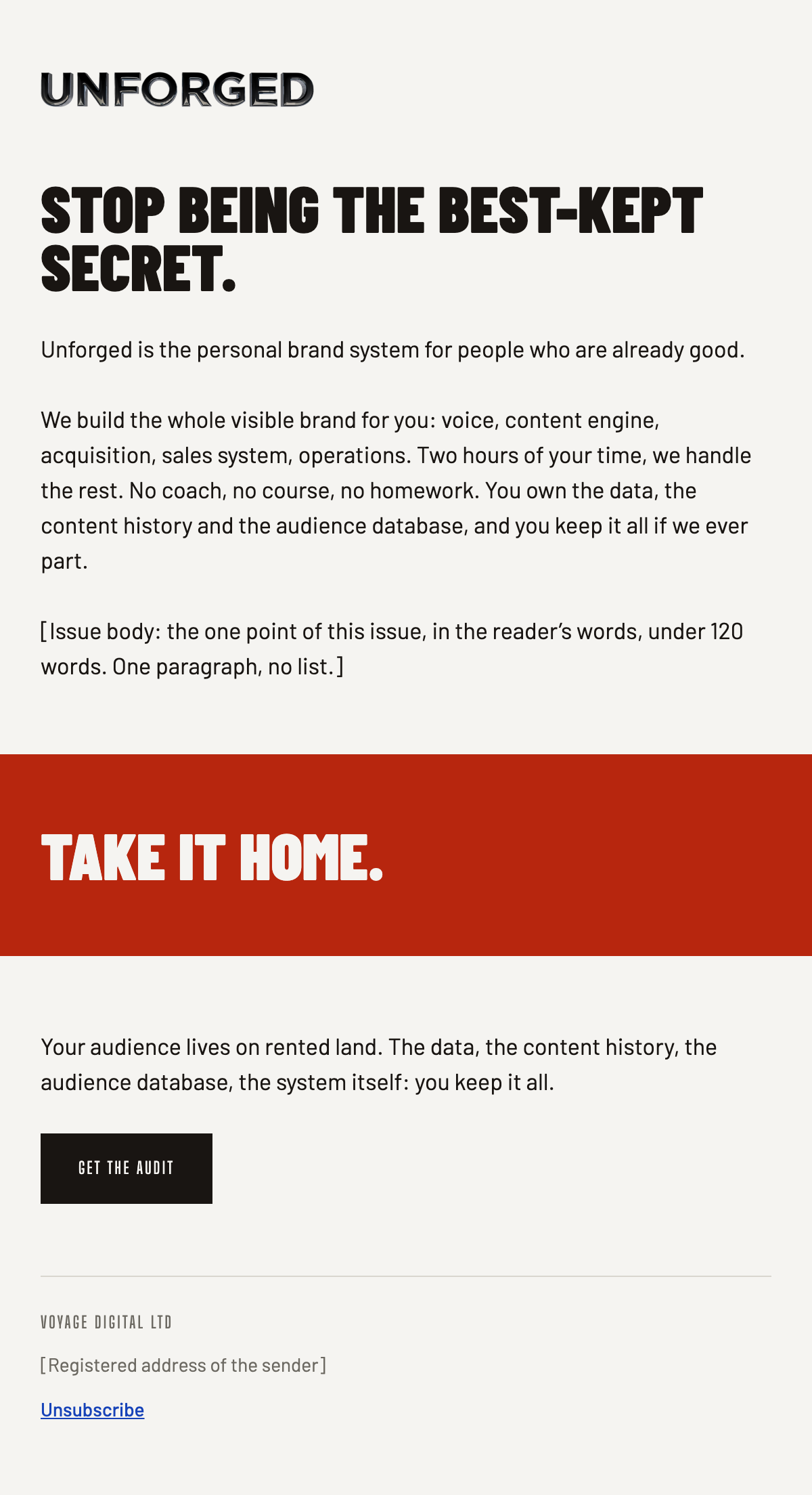 Newsletter
A table based email on paper. The dark mark alone in the masthead, the headline live at the head step, a fallback render for clients that drop the web font.
Newsletter
A table based email on paper. The dark mark alone in the masthead, the headline live at the head step, a fallback render for clients that drop the web font.
-
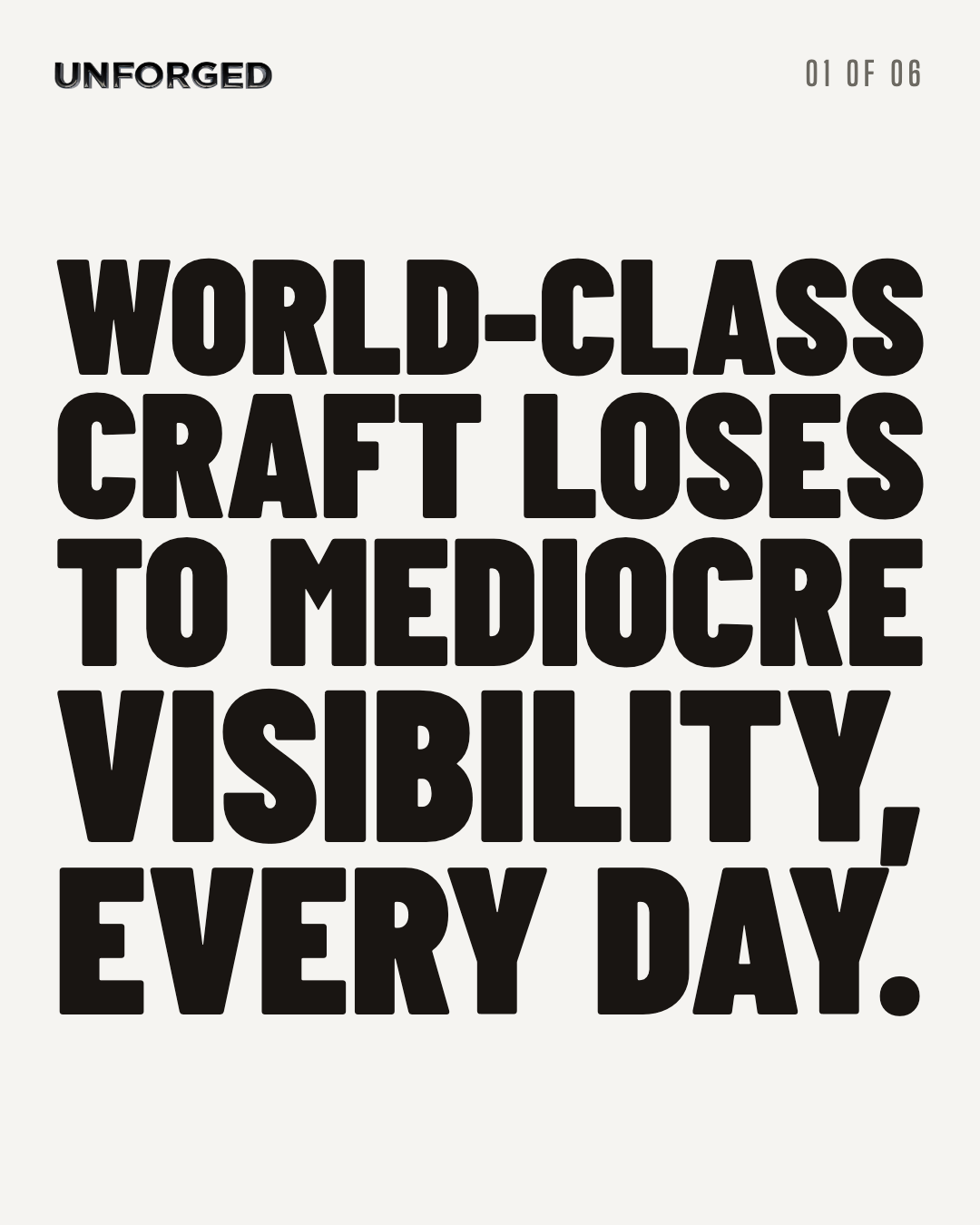 Carousel
Six slides on paper. A cover with a flush hook, four content slides, one close. Rendered at 1080 by 1350 and at twice that.
Carousel
Six slides on paper. A cover with a flush hook, four content slides, one close. Rendered at 1080 by 1350 and at twice that.
-
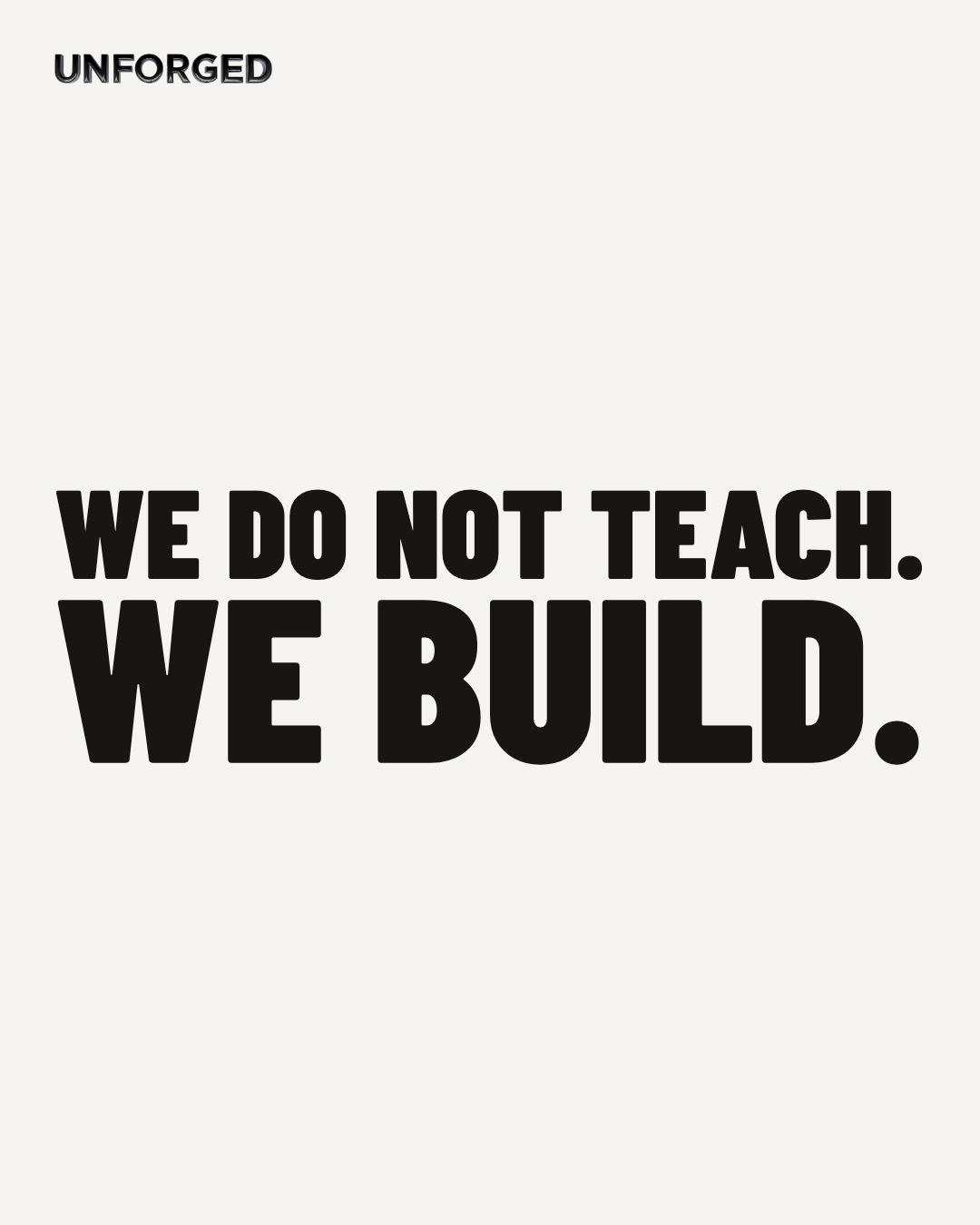 Statement tile
One flush statement, the dark mark small. Three settings: on paper, on paper with the band, and on the flood.
Statement tile
One flush statement, the dark mark small. Three settings: on paper, on paper with the band, and on the flood.
-
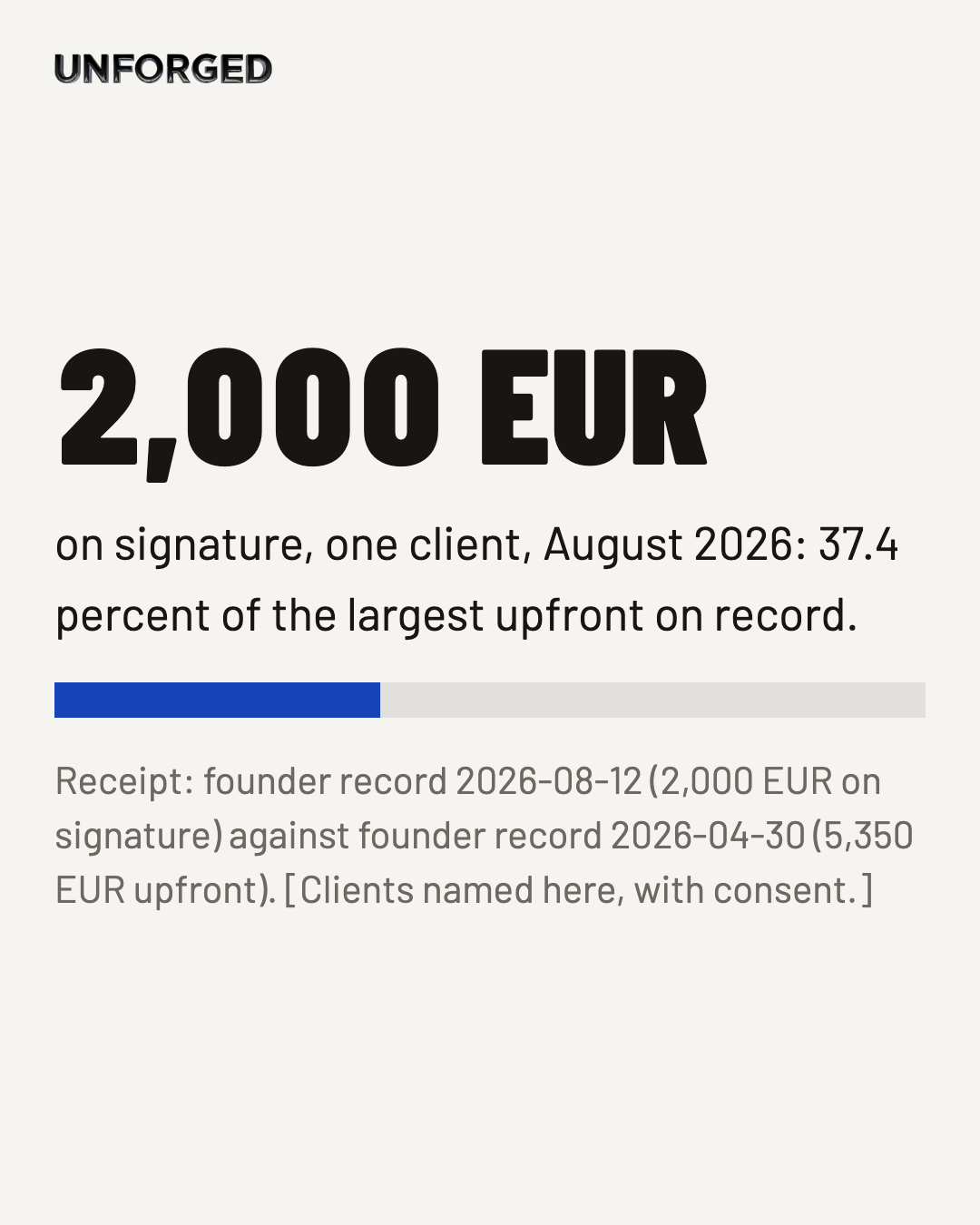 Proof tile
One number at the display step, what it measures, and its receipt. The number never appears without the source.
Proof tile
One number at the display step, what it measures, and its receipt. The number never appears without the source.
-
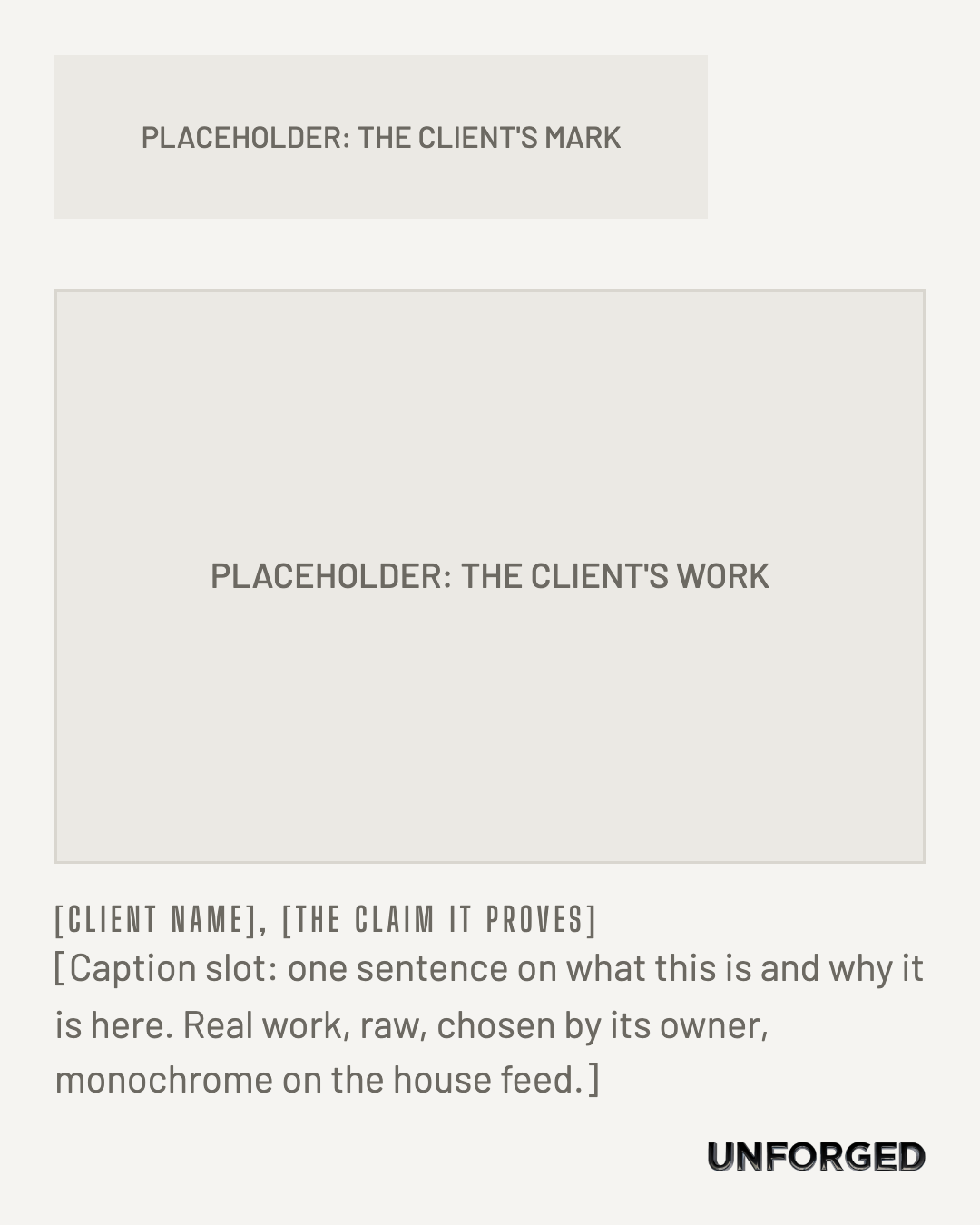 Client work tile
The client's mark at the top at three times the width of ours, then the work. The one template where the house is deliberately the smaller name.
Client work tile
The client's mark at the top at three times the width of ours, then the work. The one template where the house is deliberately the smaller name.
-
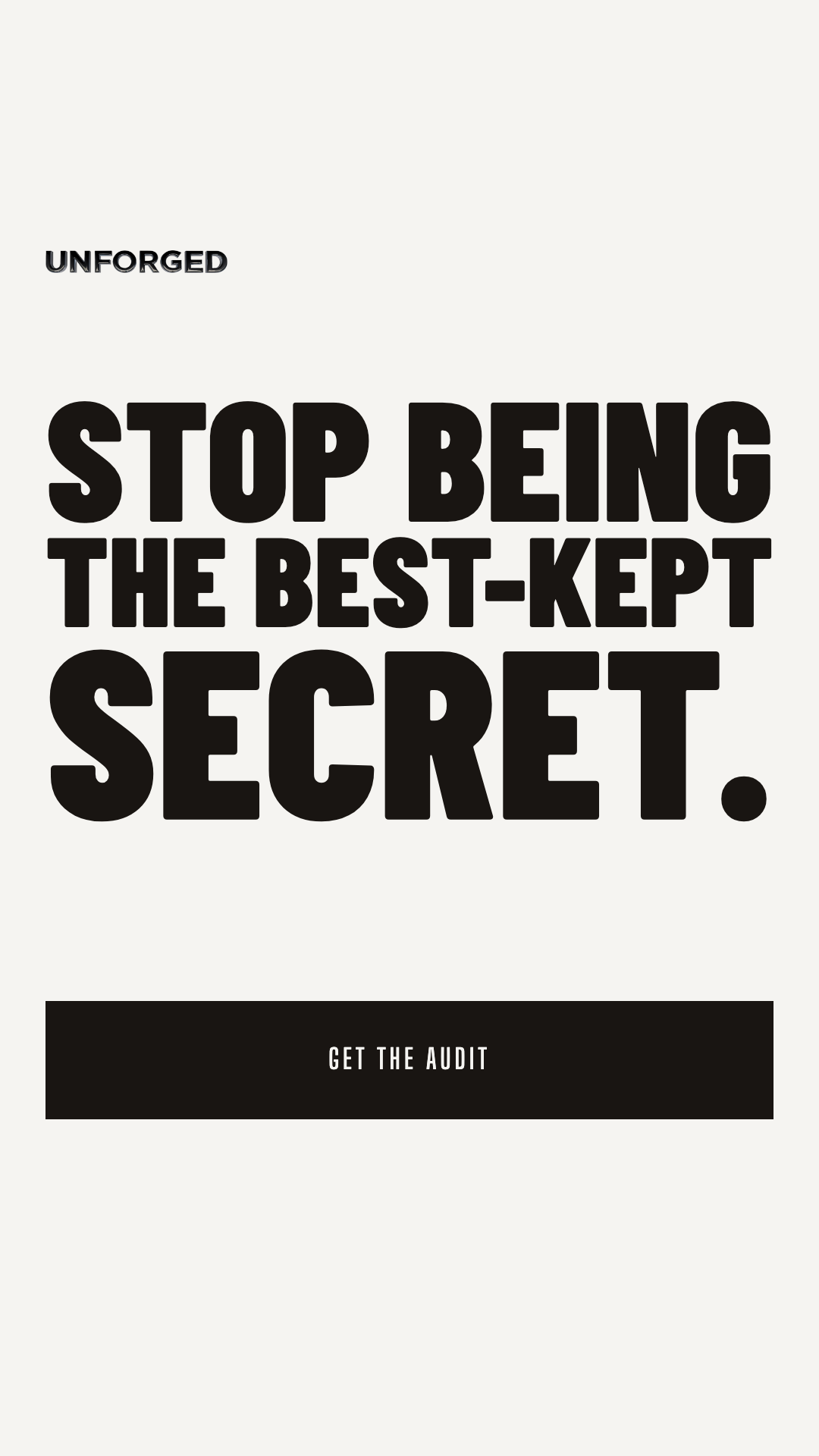 Story
The dark mark, one flush statement centred, the action as a block. 1080 by 1920.
Story
The dark mark, one flush statement centred, the action as a block. 1080 by 1920.
-
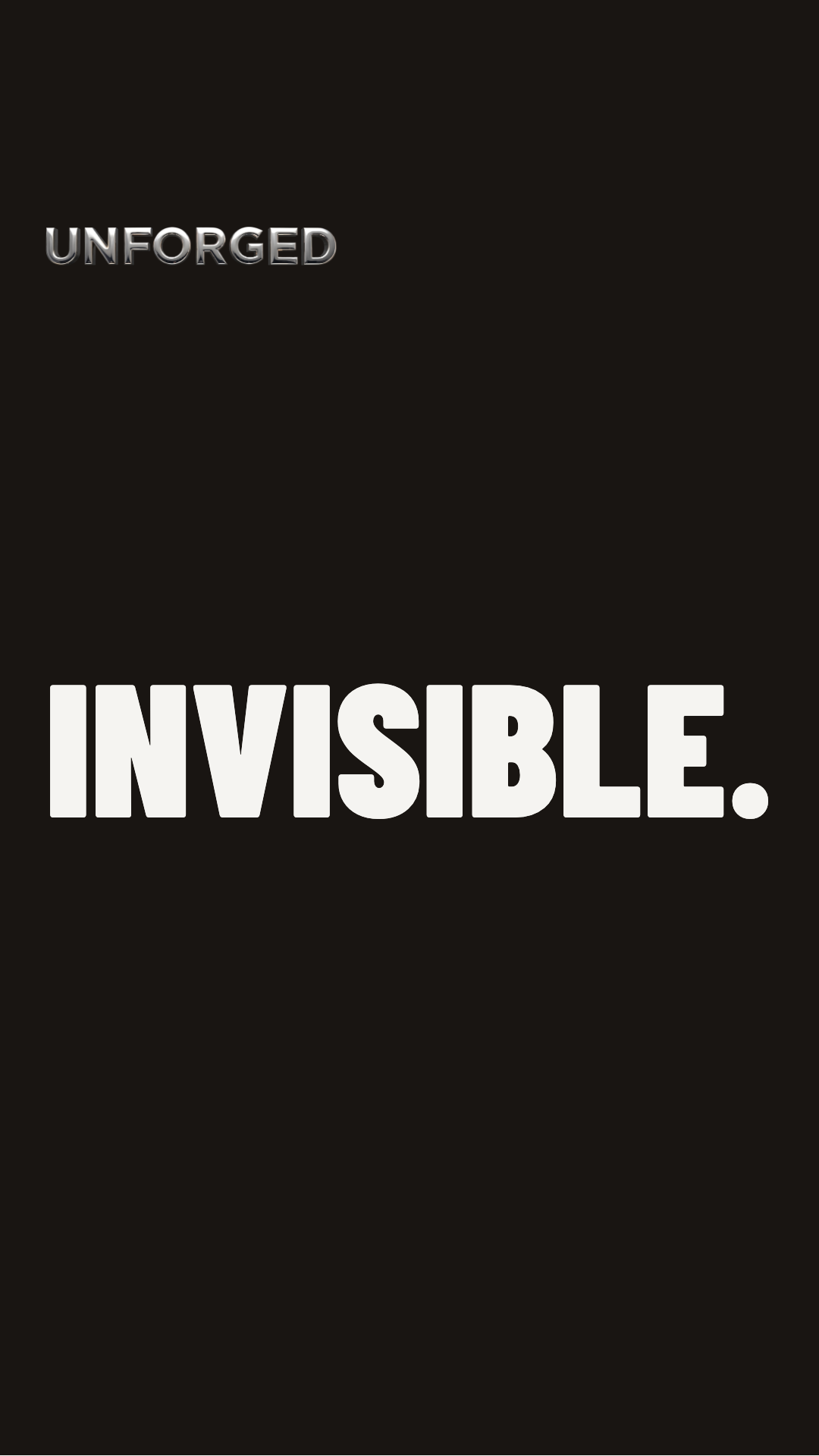 Reel cover
The flood, the light mark, one word flush to the column. One of the two permitted flood entries on that surface.
Reel cover
The flood, the light mark, one word flush to the column. One of the two permitted flood entries on that surface.
-
 Highlight covers
Five covers on paper, one object each and no text. The one place a chrome object stands without an explanation beside it.
Highlight covers
Five covers on paper, one object each and no text. The one place a chrome object stands without an explanation beside it.
-
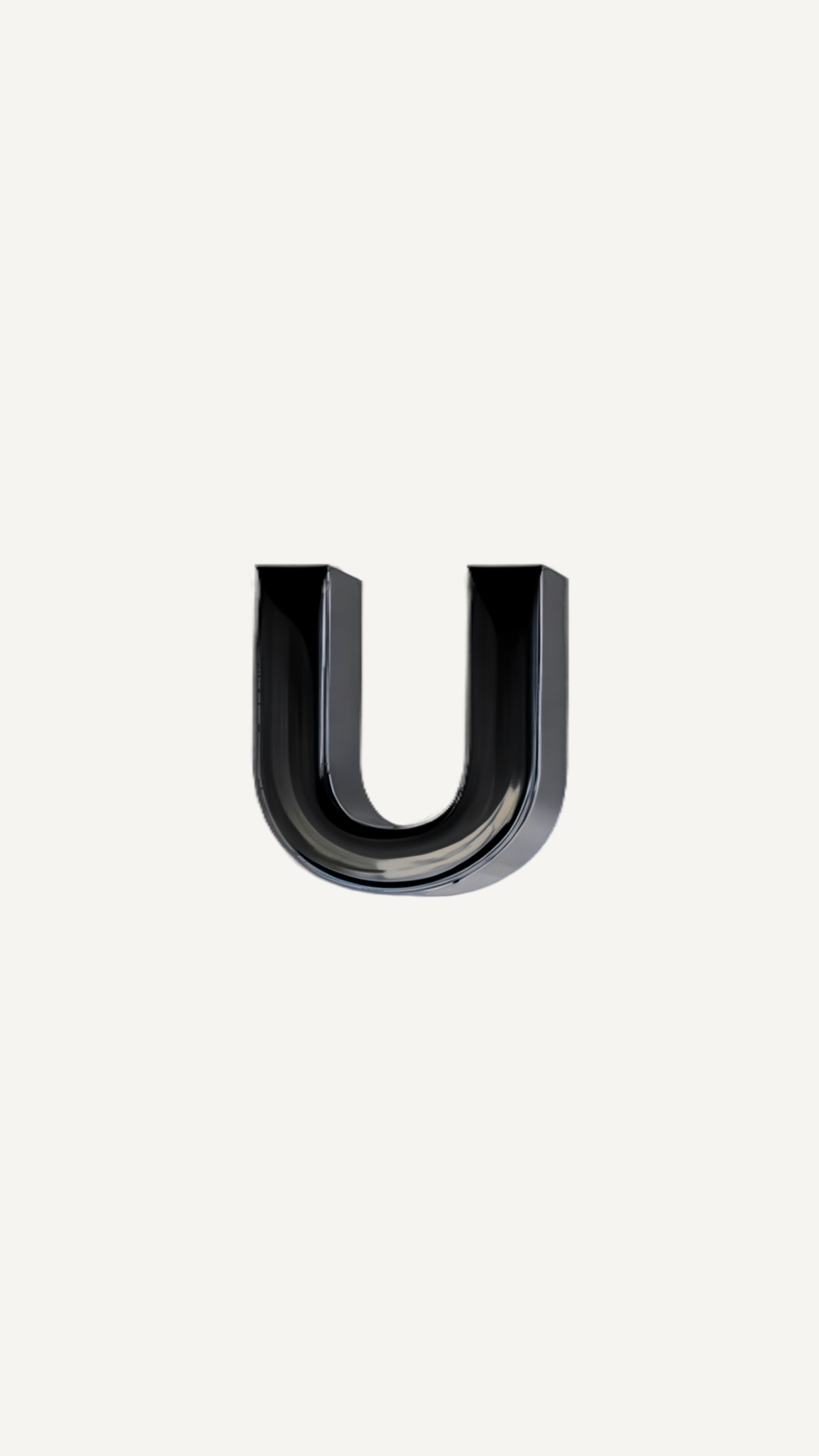 The Instagram grid spec
What a tile is, how nine of them sit together, and which template each position takes. Read this before making any single tile.
The Instagram grid spec
What a tile is, how nine of them sit together, and which template each position takes. Read this before making any single tile.
Offline
Flat print artwork. The identity is print native by construction, which is what won it the direction: ink on paper plus one spot colour, and chrome carrying the one substitution.
-
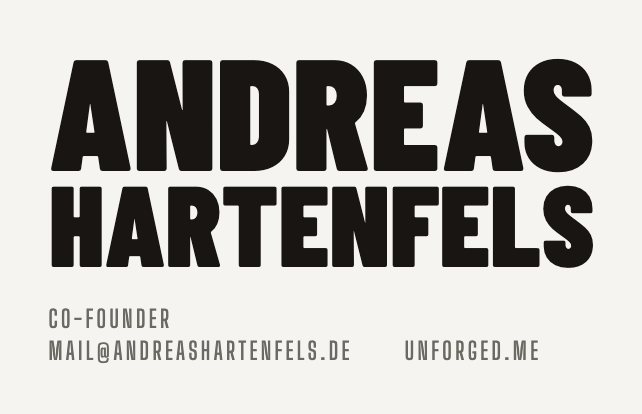 Business card
85 by 55mm, duplex. Two artworks of two sides each, with the print files and the PDFs beside them.
Business card
85 by 55mm, duplex. Two artworks of two sides each, with the print files and the PDFs beside them.
-
 Letterhead
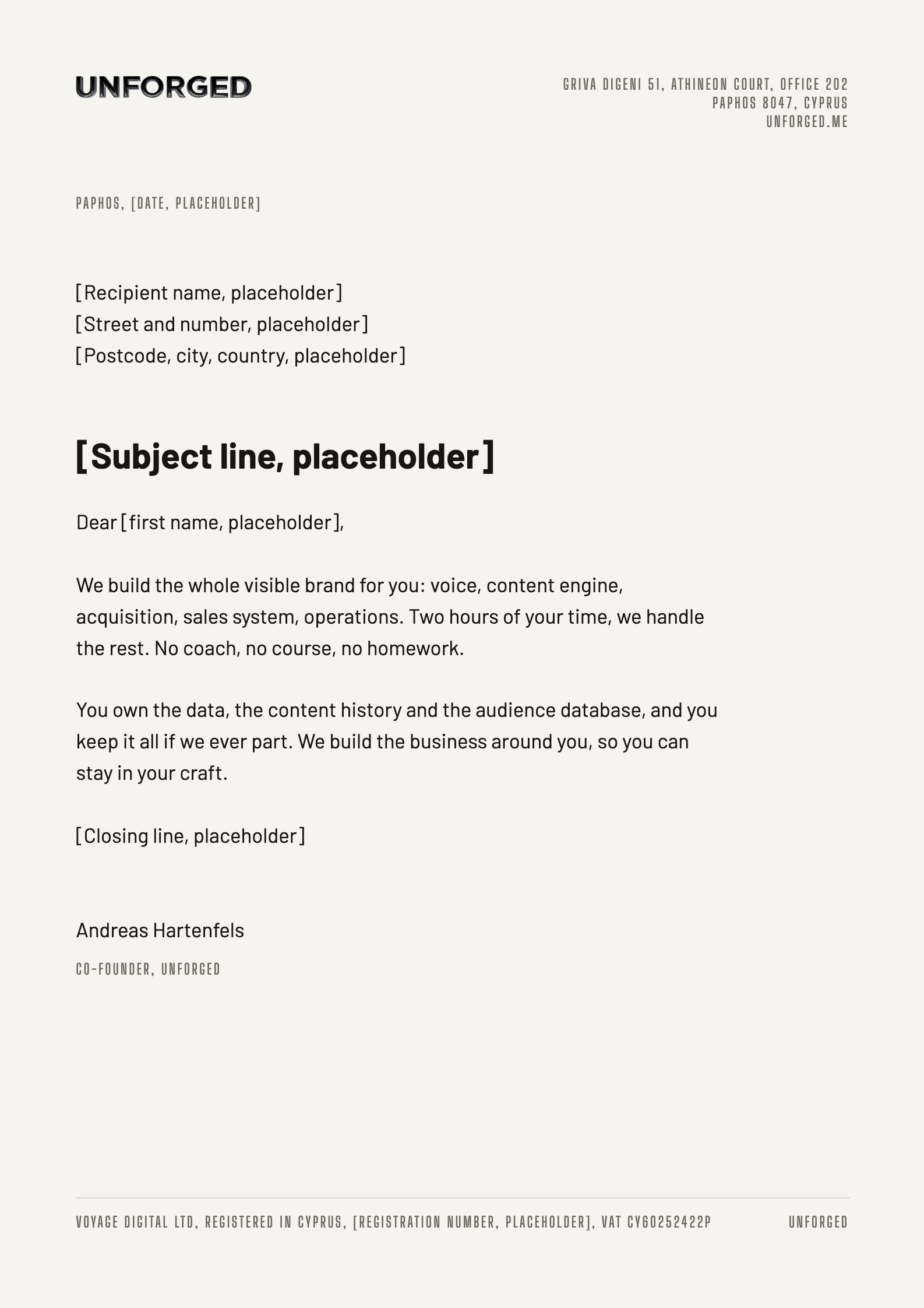
A4, in a specimen setting and a print setting. The dark mark inline, because on paper below the hero the light version does not go.
Letterhead
A4, in a specimen setting and a print setting. The dark mark inline, because on paper below the hero the light version does not go.
-
 Compliment slip
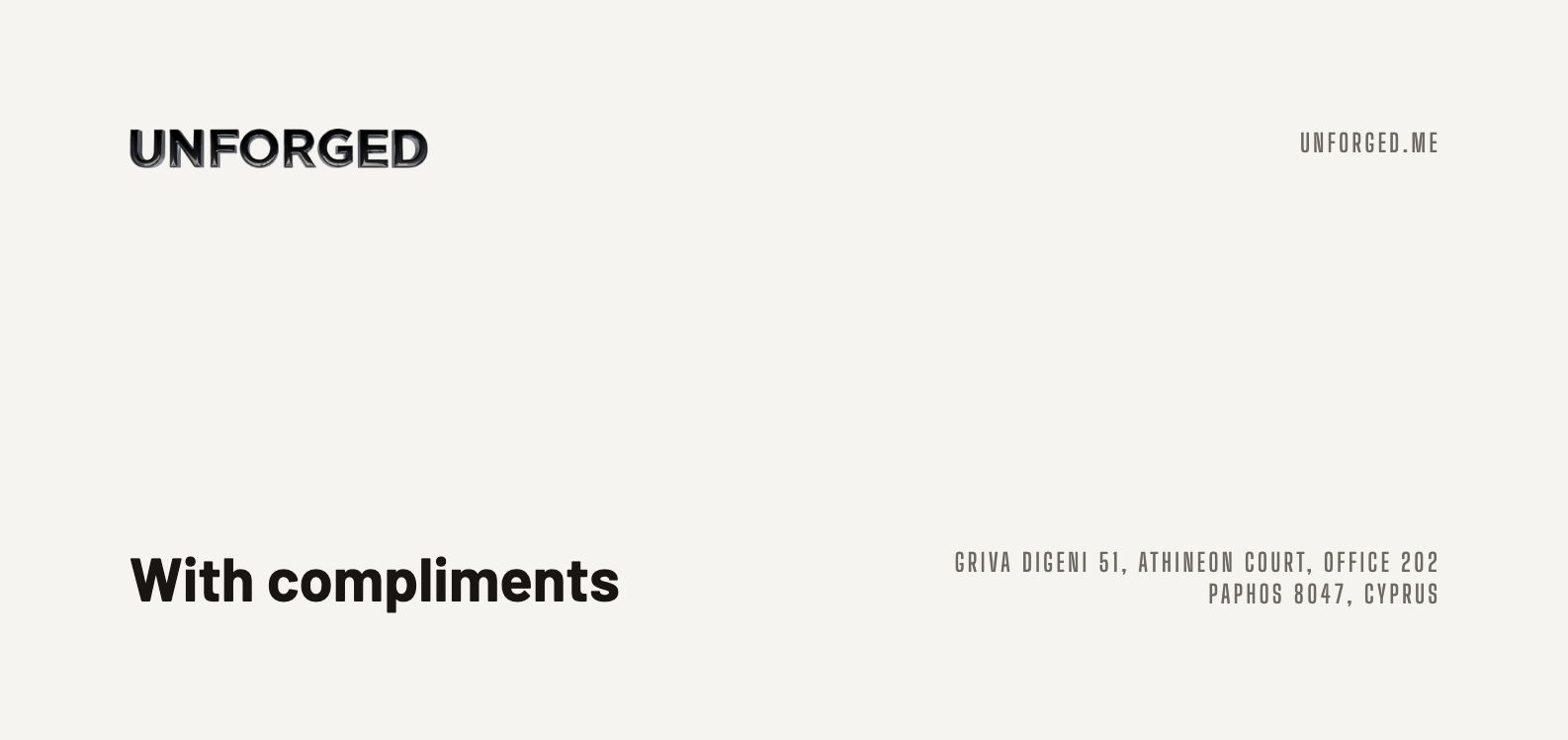
DL, 210 by 99mm, on paper and on the flood.
Compliment slip
DL, 210 by 99mm, on paper and on the flood.
-
 Invoice
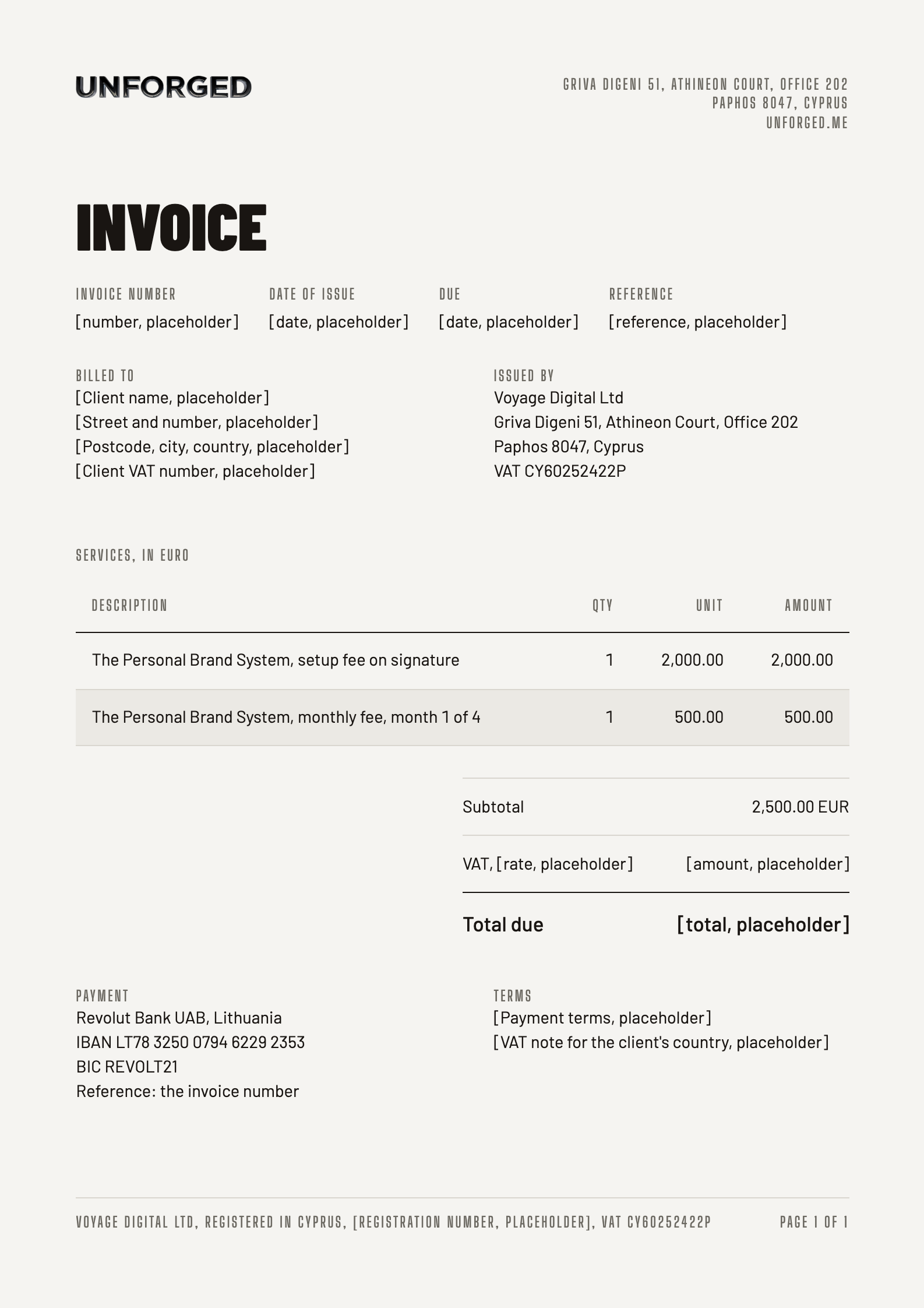
Two settings, and the difference between them is the naming rule. One carries the brand, one carries the legal entity, and they are never mixed on one sheet.
Invoice
Two settings, and the difference between them is the naming rule. One carries the brand, one carries the legal entity, and they are never mixed on one sheet.
-
 Sticker sheet
Round at 50mm, square at 50mm, a strip at 100 by 30mm, each on paper and on the flood.
Sticker sheet
Round at 50mm, square at 50mm, a strip at 100 by 30mm, each on paper and on the flood.
-
 Merch and space
The flat artwork of nine objects in two settings each: shirt, cap, tote, sticker, card, box lid, woven label, rollup, booth. Flat artwork, never a perspective mockup.
Merch and space
The flat artwork of nine objects in two settings each: shirt, cap, tote, sticker, card, box lid, woven label, rollup, booth. Flat artwork, never a perspective mockup.
Briefs
Three sheets that go out to somebody who is not us. Each is built on the document frame, so a vendor reads the identity before reading the instruction.
-
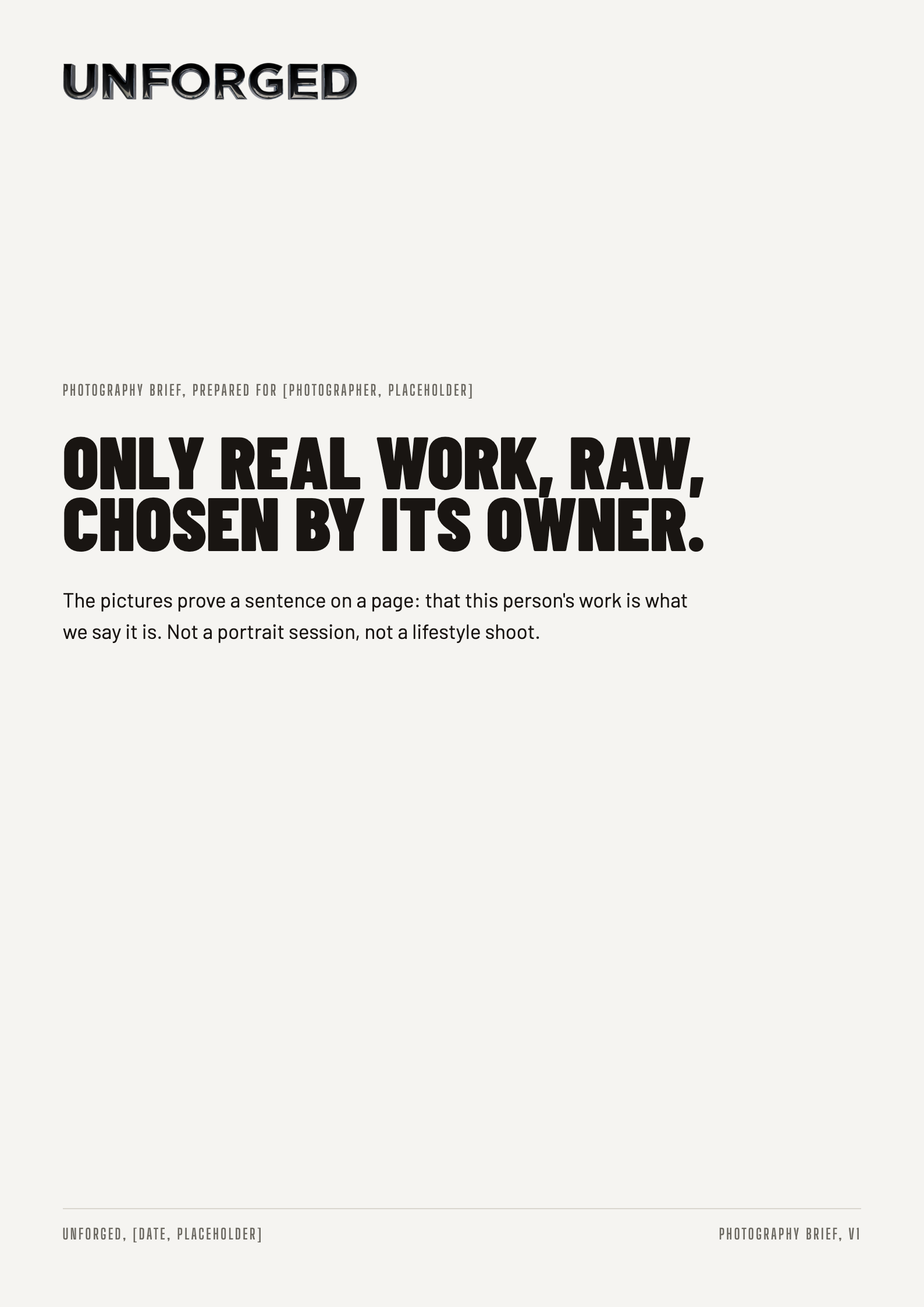 Photographer brief
Four sheets. What we are making, the frames, the light, the background, the lens, the treatment, the delivery. Commercials and rights go in the purchase order, sent separately.
Photographer brief
Four sheets. What we are making, the frames, the light, the background, the lens, the treatment, the delivery. Commercials and rights go in the purchase order, sent separately.
-
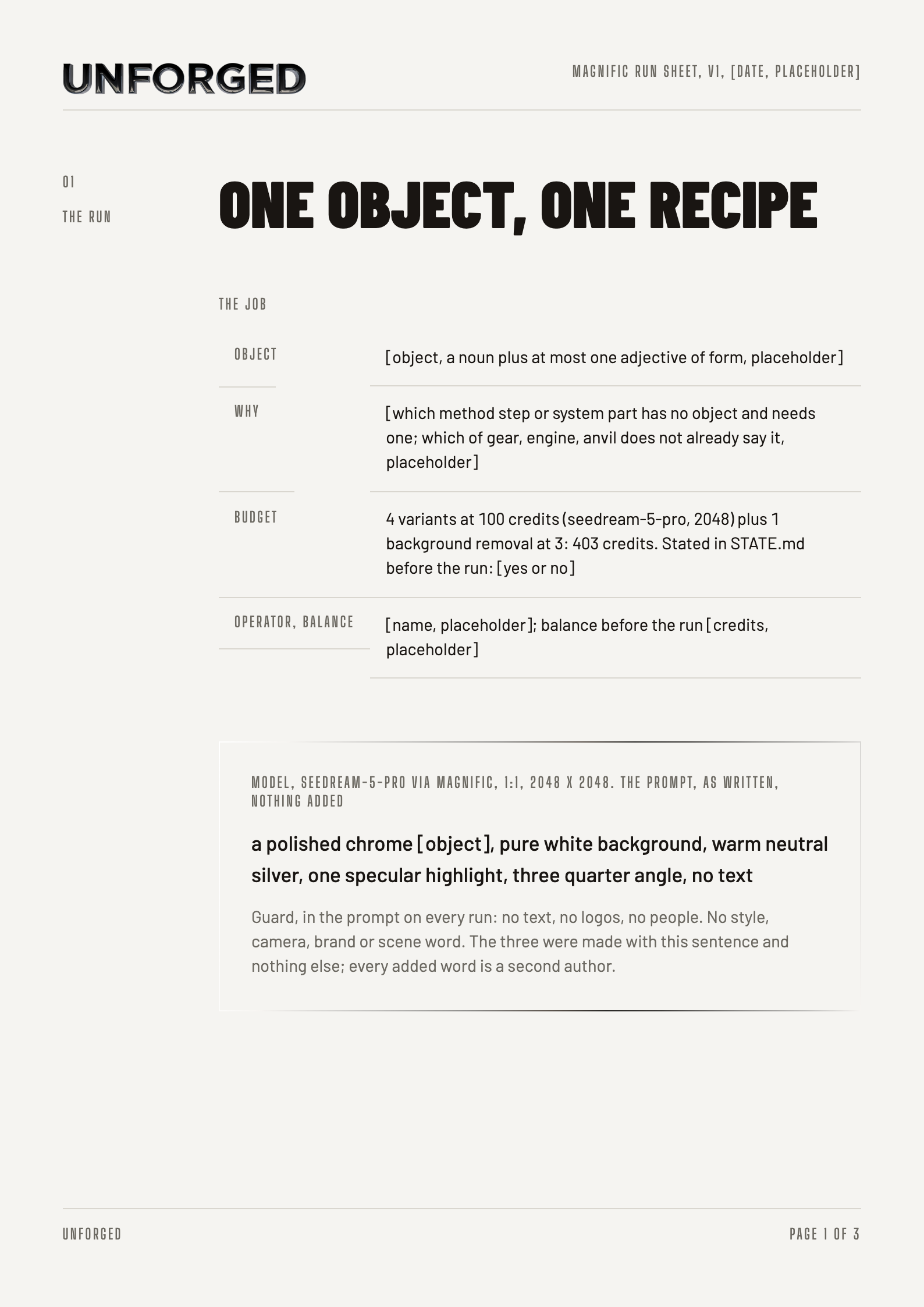 Generator run sheet
Three sheets an operator fills before and after a run for a new chrome object. The job, the reason, the budget, the prompt, the guard, the six acceptance checks, the log.
Generator run sheet
Three sheets an operator fills before and after a run for a new chrome object. The job, the reason, the budget, the prompt, the guard, the six acceptance checks, the log.
-
 Mark reveal
The three second hold that opens a house video, rendered as its three distinct frames at 16:9 and 9:16. It is a hold, not an animation.
Mark reveal
The three second hold that opens a house video, rendered as its three distinct frames at 16:9 and 9:16. It is a hold, not an animation.
Surface layers, and the rule that keeps them apart
A surface applies a subset of the house identity and adds constraints that are true only for it. A surface may narrow the house layer. It may never widen it and never contradict it.
| Surface | Its layer file | Status |
|---|---|---|
| Brand audit, private per client | audit.md | Applied subset. The one surface with a production system behind it. |
| Landing page | landing-page.md | Scoped, not built. |
| Proposal and document | proposal.md | Scoped. The document template above renders it. |
| The web in general | web-guidelines.md | Layout, breakpoints, rhythm, accessibility and performance floors, the ship checklist. |
| App, social frame, deck | None yet | Listed in scope-statement.md. No narrowing on record, so each inherits the whole house layer. |
The worked case, which is the reason the rule exists
The audit forbids every signal. No band, no data colour, no highlight, no severity badge, no status pill, no colour only legend. In the audit build the tokens are absent, which is stronger than a rule telling people not to use them.
That constraint is correct for the audit and wrong for the house. The audit reader is the subject of the document, so a field next to a finding reads as a verdict on them. On a landing page nobody is being graded, and the same band reads as the hero band. So the constraint stays in the audit's own file, marked surface scoped, and never appears in the colour document as a house rule.
The test before anything is promoted from a surface to the house, yes or no: does the constraint hold on the landing page, the proposal, the app and a social frame, for the same reason? One no, and it stays where it is.
The carve out runs both ways
The person pair is audit only. A brand surface codes its data in blue and has no person colour. Data is blue is a brand surface rule. Two people are those two values is an audit rule. Neither of them is a house rule.
Chapter 07 of the Unforged brand book. The templates live under 03_CREATIVE/04_TEMPLATES/; each folder carries its own README, its rendered artwork and the script that cuts it. The layer rule is 01_IDENTITY/01_BRAND-LAYER/layer-model.md v3.